Bridger National Forest
Silent SpringBridger National Forest, in Wyoming, is presented as a stark example of the ecological cost of treating a landscape as a single problem to be chemically corrected. In a campaign to create more grassland for cattle, the United States Forest Service sprayed about 10,000 acres of sage country. The treatment killed its intended target, but also the willows along the streams; the resulting losses reached beyond vegetation, undoing habitat and the beaver-made structures that sustained a lake.
A landscape formed by extremes
The Forest stands within the high western plains and the lower mountain slopes, a region shaped by the uplift of the Rocky Mountain system millions of years ago. Its harsh climate—long winters and demanding conditions—helped make the land of the sage a distinctive ecological system rather than an unfinished version of grassland. Across ages of natural experimentation, plants and animals adapted to those conditions together. The fleet pronghorn and sage grouse were among the animals closely adjusted to this habitat.
That context matters to the Forest Service campaign. Land-management agencies, responding to cattlemen’s demand for more grazing land, sought grass without sage. The book challenges the premise that sagebrush was merely an obstacle to improvement: in this country, grass grew mixed with and sheltered by the native vegetation, while sage and other wild plants also mattered to animals facing winter storms. Replacing that complex arrangement with a simplified grazing landscape put more than one plant community at risk.
The spraying and its collateral damage
The Forest Service treated roughly 10,000 acres of sage lands in Bridger National Forest, yielding to pressure for additional grassland. Sagebrush was killed as intended. But the spray also killed the green ribbon of willows tracing the meandering streams across the plains. This was the indiscriminate consequence of a broad treatment: the chemical did not distinguish the desired target from the vegetation that structured life along the waterways.
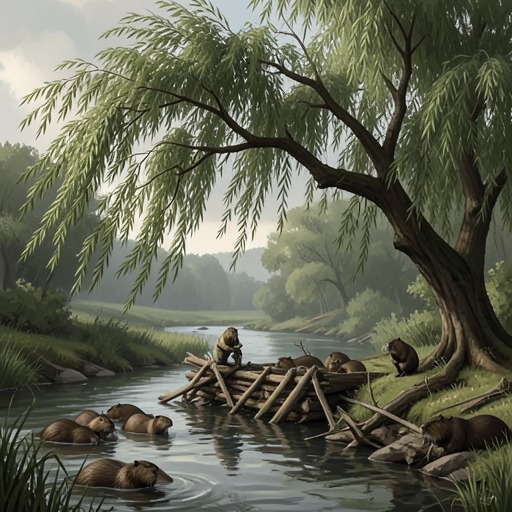
Before the spraying, the willows supported moose and beavers. The area had also been an attractive recreational landscape, with good fishing and hunting. The loss of the willows therefore changed both habitat and the human uses associated with it. The campaign’s immediate measure of success—the removal of sage—concealed damage to the stream corridors and the relationships those corridors sustained.
A drained lake and a measure of loss
William O. Douglas visited in 1959, the year of the spraying, and saw the willows shriveled and dying. When he returned a year later, the landscape supplied a further answer: the moose were gone, and so were the beavers. Their principal dam had failed without its skilled architects to maintain it, and the lake drained away. The sequence made the consequences legible in physical changes to the place: dead willows, absent animals, a broken dam, and lost water.
The episode gives Bridger National Forest significance beyond a record of herbicide use. It shows how a management decision directed at one plant can propagate through a habitat, removing species and altering the landscape’s water features. The damage was not confined to the acreage counted as successfully cleared; it unfolded through dependencies that the goal of creating grassland had ignored.